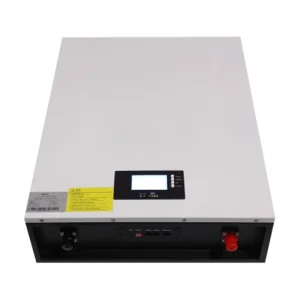
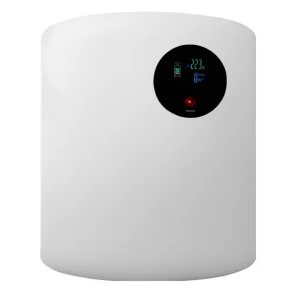
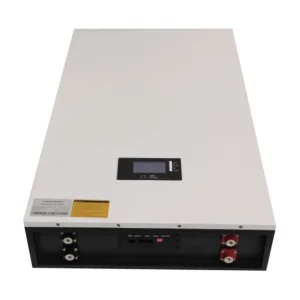
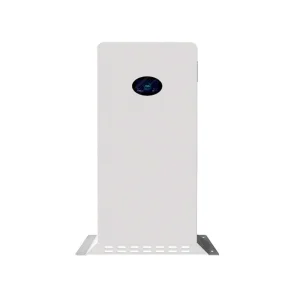
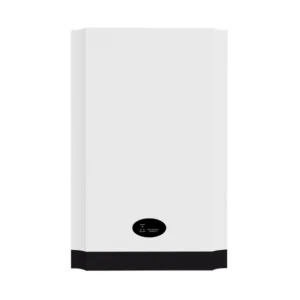
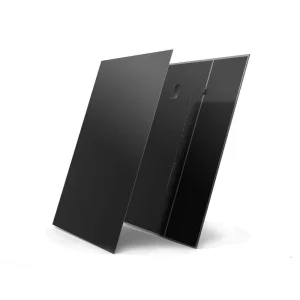
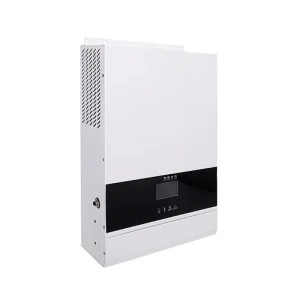
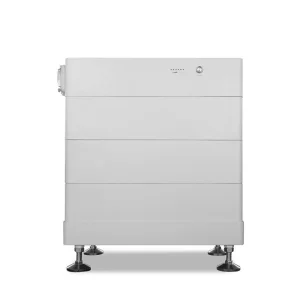
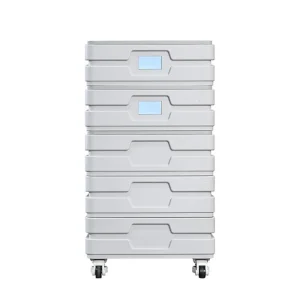
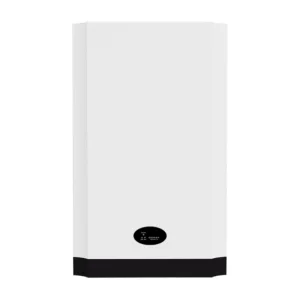
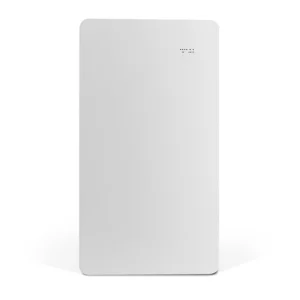
Explore our premium product portfolio designed for high efficiency, durability, and seamless residential-to-commercial integration.
Established in 2019 and headquartered in Xiamen, China, Elemro Energy has built a robust reputation for delivering state-of-the-art new energy storage and electrical product solutions. We operate as a highly integrated enterprise, consolidating research and development (R&D), advanced smart production, and global sales channels under one banner. By matching high-efficiency solar modules with high-voltage and low-voltage battery storage, Elemro Energy provides end-to-end reliability for complex decarbonization objectives.
Currently, our systems power infrastructures across more than 250 diverse customers located throughout Europe, Southeast Asia, Africa, the Middle East, and the Americas. Since our inception, ELEMRO's revenue trajectory has grown aggressively year-over-year. Reflecting our deep integration capabilities and market position, our annual turnover is expected to exceed 50 million USD in 2023. We continuously innovate to meet the changing global energy landscape.
Providing cleaner energy for a greener world through specialized technology verticals.

An Analytical Whitepaper on Procurement Requirements for Combined PV + Battery Systems
Global procurement teams prioritize battery life and high thermal stability. Modern commercial organizations require suppliers to use Lithium Iron Phosphate (LiFePO4) chemistry. This selection offers over 6,000 cycles at 80% Depth of Discharge (DoD) while avoiding the risks of thermal runaway common in cobalt-based designs.
Corporate financial metrics evaluate both initial capital expenditure (CAPEX) and the Levelized Cost of Storage (LCOS). Integrated solar and battery systems reduce the Levelized Cost of Energy (LCOE) by maximizing self-consumption, offering peak shaving, and providing backup power during grid failures.
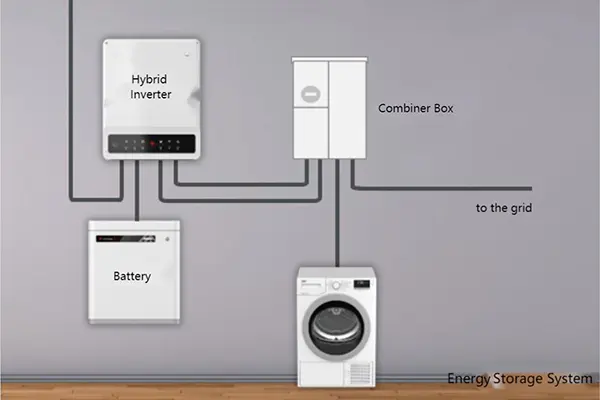
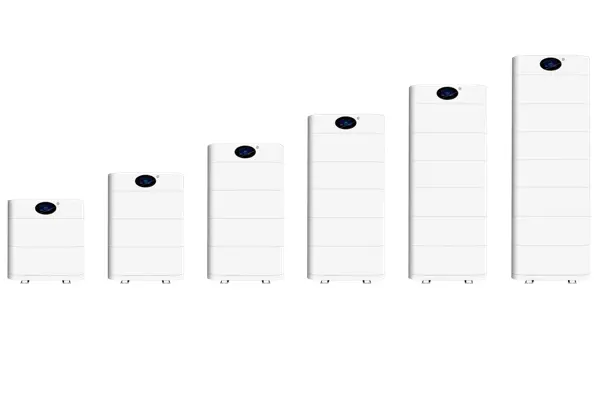
Commercial operations require minimal installation downtime. Engineering procurement contracts (EPCs) prefer modular layouts, such as stackable low-voltage (LVs) and high-voltage (HVs) battery cabinets. These designs streamline installation and simplify future capacity expansions.
Modern commercial and industrial (C&I) energy systems must support bidirectional grid interactivity. Energy Management Systems (EMS) must communicate via standard industrial protocols (Modbus TCP/IP, CAN bus) to participate in demand response programs and time-of-use (ToU) arbitrage schemes.
Combining solar panels with localized battery storage protects facilities against grid instability, ensures continuous operational uptime, and satisfies ESG (Environmental, Social, and Governance) corporate mandates.
Matching PV-ESS generation profiles to demanding commercial and residential electrical loads.
| Application Scenario | Technical Configuration | Key Performance Indicators | Primary Commercial Value |
|---|---|---|---|
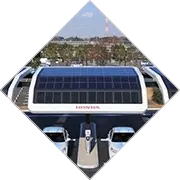
| BIPV & Solar Glass Projects | CdTe Cadmium Tellurium Thin Film Cells + High-Voltage ESS Battery | 14%-16% thin-film efficiency; 500V+ high voltage stability | Seamless architectural integration, reliable power generation in low-light conditions, clean building facades. |
| C&I Peak Shaving Microgrids | High Power Solar Inverters + Shell 14.3kWh Stackable Battery Array | System Round-Trip Efficiency > 92%; smart EMS monitoring | Reduces demand charges, secures operations during outages, and optimizes time-of-use costs. |
| Residential Solar Self-Sufficiency | Monocrystalline Solar Panels + WHLV 48V 100Ah/200Ah Home Battery | 6000+ cycle life; compact wall-mounted or floor-standing footprint | Reduces dependence on the utility grid, provides continuous clean energy at night, and cuts household power bills. |
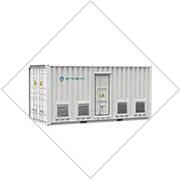
| Containerized Remote Microgrids | High-capacity solar arrays + 20ft/40ft Mobile ESS Containers | Megawatt-scale options (up to 2-5MWh per single unit) | Powers off-grid mining sites, remote agricultural systems, and isolated communities. |
How battery design and solar chemistry are shifting to drive higher energy density and system safety.
Traditional home energy systems typically relied on low-voltage 48V batteries. The industry is currently shifting toward high-voltage stacked designs (ranging from 200V to 800V DC). High-voltage configurations reduce DC-DC conversion steps, minimize resistive losses in cables, and lower thermal output. This results in faster charging times and higher system-wide efficiencies.
Cadmium Telluride (CdTe) thin-film photovoltaic technology is a leading material choice for Building-Integrated Photovoltaics (BIPV). CdTe panels perform efficiently in shaded or high-temperature environments, showing lower temperature coefficients compared to standard crystalline silicon. This ensures stable power output across varying environmental conditions.
Next-generation Battery Management Systems (BMS) utilize cloud analytics and machine learning to estimate State of Charge (SoC) and State of Health (SoH) in real time. Active balancing topologies equalize cell voltages during charge and discharge cycles, extending battery life by up to 20% compared to systems using passive balancing.
Environmental standards are driving the adoption of cobalt-free formulations. Sodium-ion and lithium-iron-phosphate (LiFePO4) chemistries provide cost advantages and reduce dependence on constrained supply chains. Solid-state options remain a long-term goal to eliminate volatile liquid electrolytes and increase energy density.
Meeting international quality and safety certifications across major clean energy markets.
Navigating varying grid regulations requires strict compliance testing. For grid connection in Europe, systems must satisfy EN 50549 and VDE-AR-N 4105 requirements. In North America, the combinations must pass UL 9540A testing to evaluate thermal runaway propagation in residential and commercial energy storage applications.
Elemro Energy products undergo rigorous testing and certification processes. This ensures all shipped batteries, custom inverter designs, and solar modules satisfy international logistics and electrical safety codes. By managing compliance upfront, we reduce installation roadblocks for local partners and engineering firms.
Expert answers to common questions about system design, sizing, safety, and operation.
A1: High-voltage batteries (typically 200V-600V DC) reduce the current needed to deliver the same power output. This lowers I²R resistive losses in cabling, allows for smaller wire gauges, and increases inverter efficiency, which boosts overall system round-trip efficiency.
A2: LiFePO4 chemistry offers superior safety, longer cycle life (often >6,000 cycles at 80% DoD), and excellent thermal stability. Unlike NCM batteries, LFP chemistry is resistant to thermal runaway, making it safer for indoor installations.
A3: CdTe thin-film panels offer a lower temperature coefficient, meaning they lose less efficiency at high temperatures. They also perform better under diffuse light, partial shading, and low-light conditions, which is beneficial for building-integrated (BIPV) installations.
A4: Under normal operating conditions (charging/discharging at 0.5C rate at 25°C, with 80% Depth of Discharge), Elemro LiFePO4 batteries are rated for over 6,000 cycles. For most residential and commercial sites, this translates to 10 to 15 years of daily use before capacity drops to 80% of its original rating.
A5: The Energy Management System (EMS) monitors grid rates, solar generation, and load demand. It uses this data to optimize the battery's state of charge (SoC)—storing solar energy when generation is high, and discharging it during peak demand hours or when utility rates are elevated.
A6: Safe transport requires UN38.3 certification for all lithium battery packs. For installation, European markets require CE and IEC 62619 compliance, while North American markets require UL 1973 for battery packs and UL 9540 for integrated systems.
Read the latest insights, technical articles, and event updates from our team.
For inquiries about our products or pricelist, please leave your email with us and we will be in touch within 24 hours.
Collaborating with leading manufacturers, engineers, and distributors globally.





Compare our high-voltage battery designs, modular storage options, and residential battery units.
 Elemro Energy