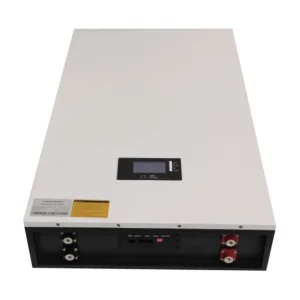
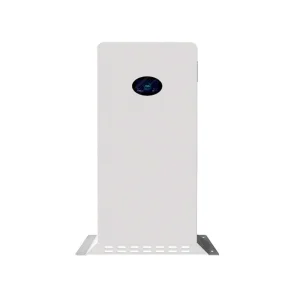
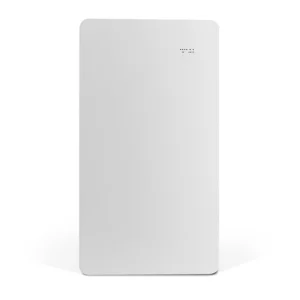
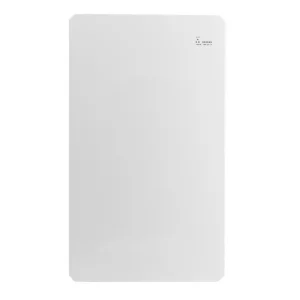
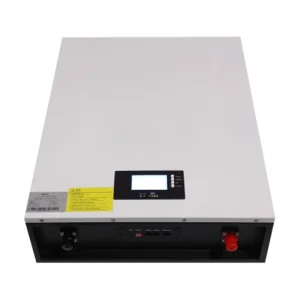
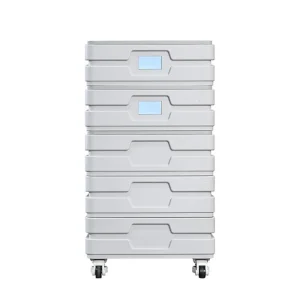
Explore our top-tier catalog of commercial-grade and domestic BESS units designed for extreme reliability, safety, and operational longevity.
Established Year
Annual Turnover (USD)
Global Active B2B Clients
LFP Cell Cycle Lifespan
As the global power sector rapidly transitions from fossil fuels to intermittent renewable sources like solar and wind, the battery energy storage system (BESS) has emerged as the linchpin of grid stability, commercial energy independence, and residential backup security. The capacity to stockpile electric power and deliver it dynamically during peak demand cycles is no longer just a sustainable goal; it is a critical operational parameter for modern utility grids, manufacturing hubs, and logistics chains globally.
Industrial electrification and peak-load optimization are driving double-digit annual growth rates across North America, the European Union, Southeast Asia, and the Middle East. The modern BESS sector is segmenting into distinct application levels: high-capacity front-of-the-meter (FTM) utility projects that stabilize regional grids, behind-the-meter (BTM) installations protecting manufacturing plants from costly voltage sags, and residential decentralized smart storage that works in tandem with rooftop photovoltaic configurations. Global supply networks require batteries that are not only high-density but also meet rigid international certification standards (such as UL 1973, UL 9540A, CE-LVD, and UN 38.3) to guarantee safety under thermal stress.
Why do global developers and energy project integrators turn to Chinese BESS factories? The answer lies in the concentrated, vertically integrated supply chain ecosystem. In China, key raw materials (lithium carbonate, cobalt, synthetic graphite anodes, and PVDF binders) are processed within a few hundred kilometers of the cell fabrication lines. This reduces logistical overheads and minimizes supply chain friction.
Furthermore, Chinese gigafactories employ extreme production automation. Laser welding precision at the micrometer level guarantees minimal internal electrical resistance within battery modules. Cell sorting methodologies—governed by advanced AI predictive analytics—ensure that every cell within a battery pack shares identical internal resistance, thermal behavior, and capacitance profiles. This prevents the "weakest link" degradation path common in lower-tier assemblies. Elemro Energy, headquartered in Xiamen, leverages this logistical and manufacturing hub power to deliver top-tier LFP solutions globally.
Ensuring ultra-low voltage deviation across stack modules for uniform thermal load distribution.
Deploying aerosol fire protection systems combined with structural multi-layer safety barriers.
Choosing the right BESS topology depends on the local grid structure, economic incentives, and operational constraints:
Established in 2019, headquartered in the high-tech logistics hub of Xiamen, China, Elemro Energy has specialized in providing new energy storage and electrical product solutions with rich industry experience. As a market leader that unifies R&D, advanced manufacturing, and global sales pipelines, ELEMRO has scaled its reach to over 250 corporate clients across Europe, Southeast Asia, Africa, the Middle East, and the Americas.
Through commitment to material science engineering and rigorous quality verification, ELEMRO's annual turnover is expected to exceed 50 million USD, demonstrating the global community's trust in our reliability, technical innovation, and dedicated support engineering.
About Us
For procurement directors, engineering heads, and EPC project managers, securing utility-scale, industrial, or residential storage configurations is a capital-intensive decision. Selecting a BESS partner requires evaluating specific technical parameters to guarantee the long-term ROI of the project:
Opt for cells with a minimum rating of 6000 cycles at 80% Depth of Discharge (DoD) to ensure continuous operation over 10 to 15 years.
A smart Battery Management System (BMS) must communicate natively with the master Energy Management System (EMS) via Modbus TCP/IP or CANbus to monitor cell temperatures, voltage levels, and state of health (SoH).
Furthermore, safety metrics must be thoroughly audited. Authentic test documentation under UL 9540A must be provided by the factory to demonstrate that any cell-level thermal runaway will not propagate through the entire rack enclosure. Thermal management—whether through forced air cooling or liquid cooling channels—must maintain the operating temperature between 15°C and 35°C to prevent rapid aging of the lithium-ion matrix.
Our application engineers are ready to assist you. Leave your target specifications and project details, and our technical sales team will reply within 24 hours.
Inquiry For PricelistStay up to date with the latest advancements in energy storage, inverter technologies, and industry trends.
Answering key technical and logistical questions commonly raised by system designers and commercial buyers.
LiFePo4 offers superior thermal stability, virtually eliminating the risk of oxygen release during thermal events. Additionally, it provides a significantly longer cycle life (6000+ cycles compared to NMC's ~2000-3000) and is environmentally friendlier as it does not rely on cobalt or nickel.
Every product batch is subjected to rigorous quality control protocols. This includes automatic electrical testing, cell balancing, charge-discharge endurance runs, and environmental simulation testing to verify capacity consistency and thermal management integrity.
Low-voltage systems (usually 48V nominal) are easier and safer to install in residential applications. High-voltage systems (often 100V to 400V+) reduce losses over long cable runs and improve overall round-trip conversion efficiency. This makes them ideal for high-capacity applications.
Yes. Equipped with compatible smart hybrid inverters, ELEMRO storage units can operate in full off-grid modes. They generate local reference grid signals to power critical loads continuously during utility network outages.
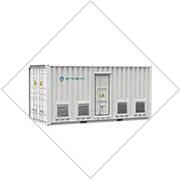
Typical fabrication, configuration, thermal testing, and shipping lead times for standard 20ft/40ft container systems range from 8 to 12 weeks, depending on custom specification levels and system capacities.
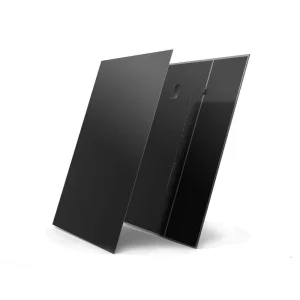
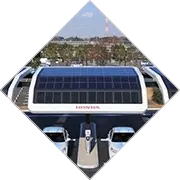
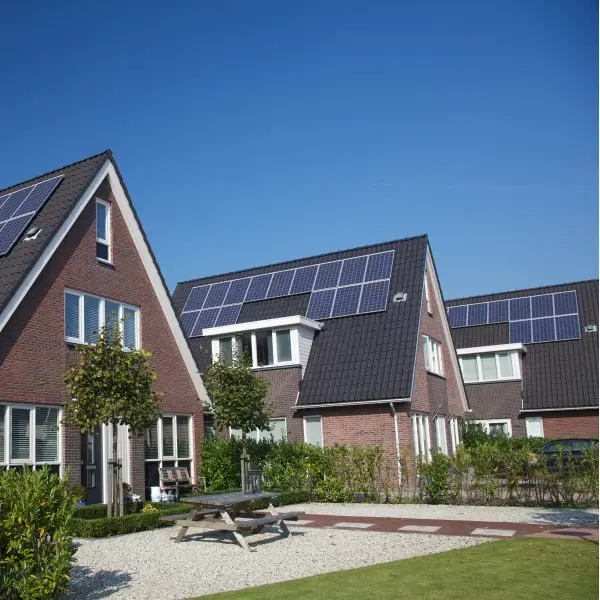
CdTe (Cadmium Telluride) thin-film solar panels deliver stable energy generation under low-light and high-temperature conditions. When paired with BESS, they form a highly reliable energy source for BIPV projects, maximizing round-the-clock green power self-sufficiency.
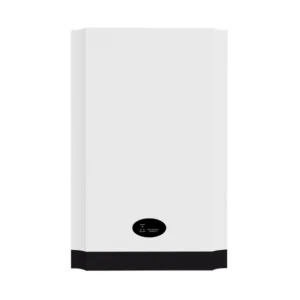
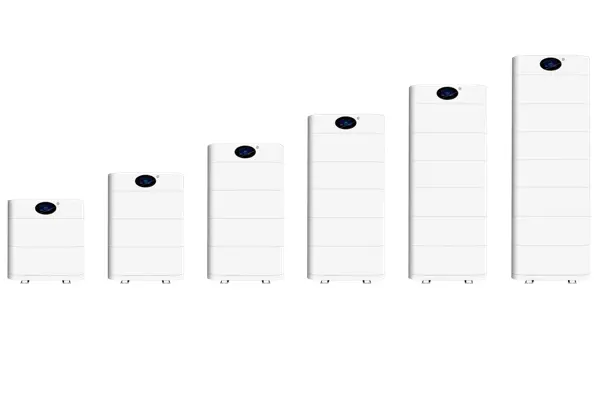
Complete your green energy infrastructure with our high-voltage battery modules, smart hybrid inverters, and high-efficiency backup packs.




 Elemro Energy