Choosing a reliable Solar Backup Battery supplier in China requires more than comparing factory prices. Buyers must examine product quality, technical support, certifications, and long-term service. A battery may look competitive on paper, yet perform poorly in a hot garage or during repeated evening outages.
This guide introduces ten notable Chinese suppliers serving residential, commercial, and light industrial markets. The evaluation considers lithium chemistry, usable capacity, cycle life, inverter compatibility, monitoring systems, warranty terms, and production experience. It also considers whether suppliers provide clear test reports, installation guidance, and responsive after-sales support. Details matter.
Real purchasing decisions often depend on small facts. Can the battery deliver stable power at low temperatures? Does its battery management system balance cells accurately? Is replacement support available after several years? Factory audits, sample testing, and independent certification checks can reveal weaknesses before a large order is placed. Supplier claims should never be accepted without verification.
Ranking suppliers is not perfectly objective. Project size, local grid conditions, shipping requirements, and installer expertise can change the best choice. A compact home system may need quiet operation and simple app controls. A business may prioritize scalable storage, fire-safety design, and rapid technical assistance. Numbers can mislead. This article offers a practical starting point, while encouraging readers to compare specifications carefully and request written evidence before signing any agreement.
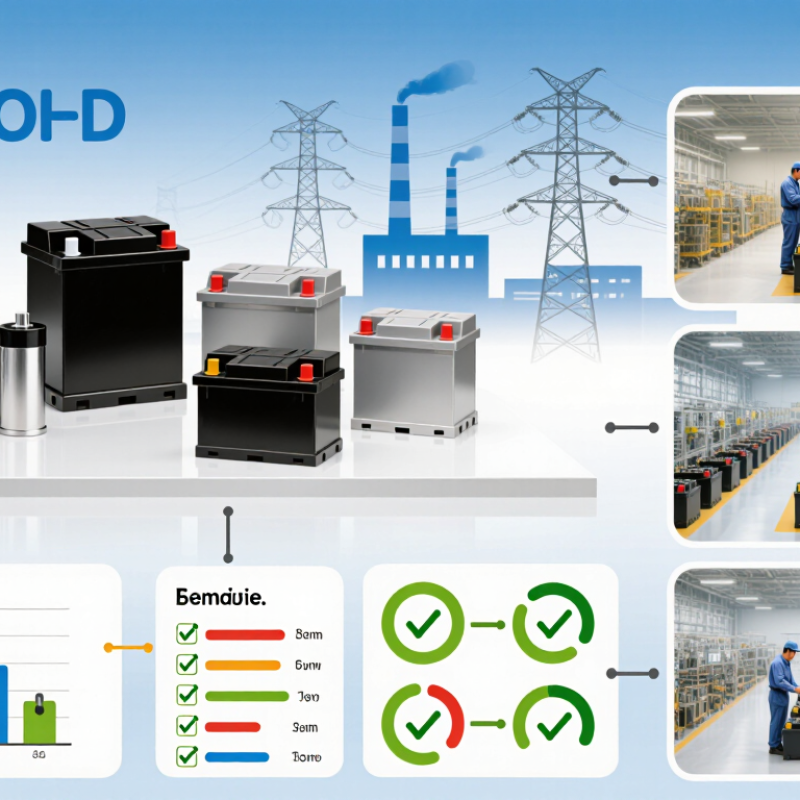
Solar backup batteries turn variable sunlight into usable power after sunset, during storms, or through grid interruptions. Their importance is growing with renewable deployment. According to IRENA’s Renewable Capacity Statistics 2024, renewables added 473 GW globally in 2023, representing 86% of new power capacity. More renewable capacity also demands better flexibility. Storage is not optional everywhere.
The IEA reported about 42 GW of new battery storage in 2023. That was a 130% increase from the previous year. At a practical site, batteries absorb midday excess and discharge it at 7 p.m. Energy management software can preserve reserve capacity for critical loads. Yet advertised capacity can mislead. Usable energy, round-trip losses, temperature, inverter limits, and degradation determine actual performance. Cold garages and dusty equipment rooms expose weak designs quickly.
When comparing suppliers, engineers should request tested cycle data, warranty conditions, service response times, and installation records. Safety certification and thermal management deserve equal attention. A five-hour backup target needs more than a large number on a brochure. Load measurements matter. Lighting, refrigeration, pumps, and communications may start together. Even strong systems need periodic inspection. I used to treat battery size as the main reliability measure. That view was incomplete. Controls, maintenance, and honest assumptions often decide whether renewable power feels dependable.
Solar backup batteries improve renewable-energy reliability by storing surplus solar power for use after sunset or during grid interruptions. This scenario compares typical nominal storage capacities with usable energy at an 80% depth of discharge and estimated backup duration for a constant 2 kW load.
Evaluating China’s solar backup battery suppliers requires more than comparing prices. The IEA PVPS Trends 2024 report recorded about 447 GW of new global photovoltaic capacity in 2023. That growth increases demand for dependable storage, but supplier quality remains uneven. Request factory records, not only product brochures. Check cell traceability, production capacity, defect rates, and testing procedures. A factory tour should include incoming inspection, welding lines, thermal testing, and final aging tests. Small details matter.
Technical compliance needs careful review. Ask for current reports against IEC 62619, IEC 63056, and UN 38.3 requirements. Confirm whether tests cover the exact battery model and firmware version. BloombergNEF reported an average lithium-ion pack price of 115 US dollars per kWh in 2024. This benchmark helps identify inflated quotations, but the cheapest offer may hide weaker cells, limited warranty support, or higher installation costs. A spreadsheet can still miss real risk.
Tips: Compare usable energy, not nominal capacity. Check round-trip efficiency, operating temperature, cycle-life conditions, and battery-management protections. Request independent test evidence and at least three verified customer references. Read warranty exclusions carefully, especially for high-temperature operation. Also inspect response times for spare parts and remote diagnosis. Ask for a sample unit before placing a large order. It may feel slower. It is usually wiser. Supplier evaluation is never perfectly tidy; field performance can differ from laboratory claims.
China’s Top 10 Solar Backup Battery Suppliers
China’s top 10 solar backup battery suppliers are often compared by safety, capacity, and delivery reliability. A serious supplier should provide clear cell specifications, battery management data, and tested cycle performance. Factory experience matters too. Ask whether the supplier supports home storage, commercial systems, or off-grid projects. These applications require different discharge rates and enclosure designs. A useful evaluation includes production audits, sample testing, warranty terms, and technical response times. Certificates alone are not enough.
Tips: Request a complete datasheet and a recent test report. Check thermal protection, low-temperature charging, and communication options. Compare usable energy, not only advertised capacity. Inspect packaging before shipment. Small details matter.
The strongest suppliers usually offer modular designs, remote monitoring, and flexible voltage ranges. They may also support installation guidance and replacement procedures. Still, no supplier is perfect. Some documents look polished but lack field evidence. Others offer attractive prices while limiting after-sales support. Buyers should test samples under realistic loads, such as evening household demand or repeated cloudy-day charging. Record temperature, voltage stability, and recovery time. A careful comparison of China’s top 10 solar backup battery suppliers should combine engineering results with honest communication, not rankings alone.
China Top 10 Solar Backup Battery Suppliers
Leading Chinese solar backup battery suppliers offer several technologies for residential, commercial, and remote power systems. Lithium iron phosphate batteries remain widely selected because they provide strong thermal stability, long cycle life, and reliable daily performance. Some suppliers also develop nickel-manganese-cobalt systems for compact applications requiring higher energy density. Sodium-ion batteries are emerging as another option, especially where lower-temperature performance and material availability matter.
Most advanced solutions include an integrated battery management system, or BMS. It monitors voltage, current, temperature, and state of charge. Good systems communicate with hybrid inverters through CAN or RS485 protocols. That detail matters during installation. A battery may have impressive capacity, yet poor communication can reduce system efficiency. Modular cabinets also allow users to expand storage gradually, from a small household unit to a larger commercial array.
Safety and service quality deserve equal attention. Suppliers commonly add thermal sensors, cell balancing, overload protection, and metal enclosures with suitable ingress protection ratings. Outdoor projects may need heating or cooling controls. Not every advertised cycle-life figure reflects real operation. Depth of discharge, ambient temperature, charging speed, and maintenance all change results. In practice, I would compare usable capacity, warranty conditions, certification documents, and local technical support rather than relying on headline numbers alone. No solution is perfect. A smaller battery with careful energy management can outperform a larger one installed without proper planning.
| Rank | Anonymous Supplier Profile | Primary Battery Chemistry | Typical Product Range | System Voltage | Core Technologies | Solar Backup Solutions | Common Safety and Compliance Features | Best-Fit Applications |
|---|---|---|---|---|---|---|---|---|
| 1 | Profile A | Lithium iron phosphate (LFP) | 5–16 kWh residential battery modules | 48 V low-voltage or 100–500 V high-voltage | Modular battery packs, integrated BMS, CAN/RS485 communication | Hybrid-inverter storage, backup power, solar self-consumption | Cell monitoring, over-current protection, thermal monitoring, enclosure protection | Homes, small offices, rooftop PV systems |
| 2 | Profile B | Lithium iron phosphate (LFP) | 10–30 kWh stackable energy-storage systems | 48 V or 96–400 V | Stackable modules, passive or active balancing, remote monitoring | Whole-home backup, time-of-use energy shifting, emergency supply | Battery disconnect, state-of-charge estimation, event logging, alarm functions | Large residences, villas, small commercial facilities |
| 3 | Profile C | Lithium iron phosphate (LFP) | 50–215 kWh outdoor battery cabinets | 400–800 V DC | Liquid or forced-air thermal management, DC bus integration, EMS compatibility | Commercial solar backup, peak shaving, demand management | Fire detection, smoke or temperature sensing, emergency shutdown, IP-rated enclosure | Factories, retail buildings, offices, microgrids |
| 4 | Profile D | Lithium iron phosphate (LFP) | 100–372 kWh integrated energy-storage cabinets | 600–1,000 V DC | Battery-thermal management, integrated PCS interface, cloud-based diagnostics | Solar-plus-storage, backup for critical loads, renewable smoothing | Multi-level protection, rack isolation, fire suppression options, remote alarms | Industrial sites, data rooms, distributed-energy projects |
| 5 | Profile E | Lithium iron phosphate (LFP) | 1–10 kWh 12 V, 24 V, and 48 V battery modules | 12–51.2 V nominal | Drop-in replacement design, Bluetooth monitoring, low-temperature charging control | Off-grid solar, RV backup, telecom and small inverter systems | Low-voltage cutoff, short-circuit protection, balancing, battery-status indicators | Cabins, mobile systems, remote monitoring stations |
| 6 | Profile F | Lithium iron phosphate (LFP) | 215–500 kWh containerized systems | 700–1,500 V DC | Container integration, liquid cooling, high-voltage control, EMS integration | Utility-scale solar firming, grid support, renewable energy shifting | Rack-level fusing, fire-control systems, thermal runaway monitoring, isolation monitoring | Solar farms, utility projects, large microgrids |
| 7 | Profile G | Lithium iron phosphate (LFP) | 20–100 kWh modular commercial systems | 100–800 V DC | Scalable rack architecture, peak-power control, solar forecasting interface | Commercial backup, self-consumption optimization, load shifting | BMS fault recording, remote shutdown, ventilation or cooling management | Warehouses, farms, workshops, commercial buildings |
| 8 | Profile H | Lithium iron phosphate (LFP) | 5–40 kWh low-voltage and high-voltage systems | 48 V or 200–500 V | Plug-and-play installation, inverter interoperability, app-based monitoring | Residential backup, solar export reduction, essential-load support | Over-voltage and under-voltage protection, temperature sensors, circuit isolation | Residential PV retrofit and new-build installations |
| 9 | Profile I | Lithium iron phosphate (LFP) | 50–200 kWh AC-coupled storage units | 400–800 V DC with integrated PCS | Bidirectional power conversion, AC coupling, microgrid controls | Backup during grid outages, solar integration, black-start support | Grid protection functions, anti-islanding compatibility, emergency stop, fire alarms | Hotels, hospitals, campuses, remote microgrids |
| 10 | Profile J | LFP and lead-acid replacement solutions | 2–15 kWh 12 V, 24 V, and 48 V systems | 12–51.2 V nominal | Form-factor replacement, parallel connection, programmable BMS | Small off-grid systems, backup lighting, security and communication loads | Battery management, fuse protection, thermal sensing, charge-temperature limits | Telecom backup, security systems, small solar installations |
Note: Supplier identities are intentionally anonymized. Capacity, voltage, and feature ranges represent commonly published configurations for comparable Chinese solar-storage products; exact specifications, certifications, warranty terms, and compatibility should be verified against the selected model.
Choosing among China’s top solar backup battery suppliers requires more than comparing online prices. In project sourcing, I inspect the factory, not only the sales office. Ask for a recent production video, cell traceability records, and a sample BMS test report. A reliable supplier should explain usable capacity, cycle-life conditions, operating temperature, and warranty exclusions in plain English. If answers remain vague, pause.
Match the supplier to your system design. A rural cabin may need a compact low-voltage battery, while a commercial site requires communication, thermal monitoring, and controlled peak discharge. Request a complete datasheet, wiring diagram, enclosure rating, and carton dimensions before negotiating. Confirm whether the battery supports your inverter protocol. Test one sample through charging, discharging, standby, and low-temperature conditions. Do not trust capacity claims from a single screenshot. Small details matter.
I once treated a low quotation as a strong advantage. The delivered enclosure had different cable glands, creating installation delays and extra labor. That mistake changed my checklist. I now compare landed cost, spare-part access, response time, and after-sales procedures. Verify factory quality controls through an independent audit when possible. Check applicable electrical, transport, recycling, and import requirements for your destination. Ask who owns the test data and how failed units are handled. Some suppliers look excellent during a video call, yet struggle with documentation. That gap deserves attention.
They store excess midday sunlight for evening use. They also support power during storms and grid interruptions. Renewable output changes. Batteries add flexibility.
Start with measured loads, not brochure capacity. Include lighting, refrigeration, pumps, and communications. Usable energy differs from advertised capacity. Inverter limits and energy losses reduce output. A five-hour target needs careful calculation.
Request cycle data, warranty terms, operating temperatures, and service response times. Ask for usable capacity and round-trip efficiency. Get a complete datasheet. Wiring diagrams matter too.
Inspect the factory when possible, not only the sales office. Request recent production footage and cell traceability records. Review a sample battery management test report. An independent audit can reveal gaps.
A rural cabin may need a compact low-voltage unit. Commercial sites often need thermal monitoring and controlled peak discharge. Confirm inverter communication protocols. Test charging, discharging, standby, and cold operation.
Check cable glands, enclosure ratings, wiring, and carton dimensions before ordering. One changed cable gland can create extra labor. Small details matter. I learned this late.
Review safety certification and thermal management together. Inspect equipment periodically. Dusty rooms and cold garages can expose weak designs. Do not assume a large battery is automatically safer.
Compare landed cost, spare-part access, documentation, response time, and after-sales procedures. A low quotation may hide installation delays. Ask how failed units are handled. My earlier assumption was incomplete.
China has become an important source of reliable and cost-effective solar energy storage solutions. This article explains how a Solar Backup Battery supports renewable energy by storing excess electricity during peak sunlight hours and supplying power when solar generation is limited or the grid is unavailable. It also introduces practical methods for evaluating Chinese suppliers, including product quality, battery chemistry, safety systems, certifications, manufacturing capacity, warranty terms, technical support, and delivery reliability.
The overview presents China’s top 10 solar backup battery suppliers by comparing their general capabilities, product ranges, and suitability for residential, commercial, and industrial applications, without focusing on brand promotion. It also examines common battery technologies and integrated solutions, such as lithium-based systems, modular storage units, monitoring platforms, and hybrid power configurations. Finally, readers will learn how to select the right supplier by matching energy requirements, installation conditions, budget, expansion plans, and after-sales service with a supplier’s technical expertise and long-term reliability.

Elemro Energy