Top 10 Solar Backup Batteries for Home and Business

Time:2026-10-15 Author:Charlotte
0%

Choosing among Solar Backup Batteries is not simply a matter of comparing storage capacity. A glossy specification sheet cannot show how a battery performs during a humid summer outage, beside a humming refrigerator, or beneath a shaded roof. This guide examines ten leading options for homes and businesses, using practical criteria such as usable capacity, chemistry, round-trip efficiency, warranty coverage, inverter compatibility, installation needs, and fire-safety documentation.

Energy-storage author and industry analyst Bill Nussey has said that “battery storage turns intermittent solar power into a more dependable energy resource.” That idea shapes this comparison. A well-sized system can keep lights, routers, medical equipment, refrigeration, or point-of-sale devices operating when the grid fails. Larger commercial systems may also reduce demand charges, although savings depend on local tariffs and operating patterns.

Real-world performance is rarely perfect. A battery’s advertised capacity may not equal its daily usable output. Cold temperatures can reduce charging speed. Poorly matched inverters can create expensive limitations. Some warranties look generous until cycle limits and end-of-life capacity are examined closely. These details matter.

The selections below balance reliability, efficiency, expandability, monitoring, and long-term value. They are not ranked for every situation. A compact home may need quiet, simple backup, while a workshop may require higher surge power and stronger load management. Professional installation remains important, especially for systems connected to the electrical panel. Even the best battery cannot compensate for an undersized solar array, unrealistic outage expectations, or weak maintenance planning.
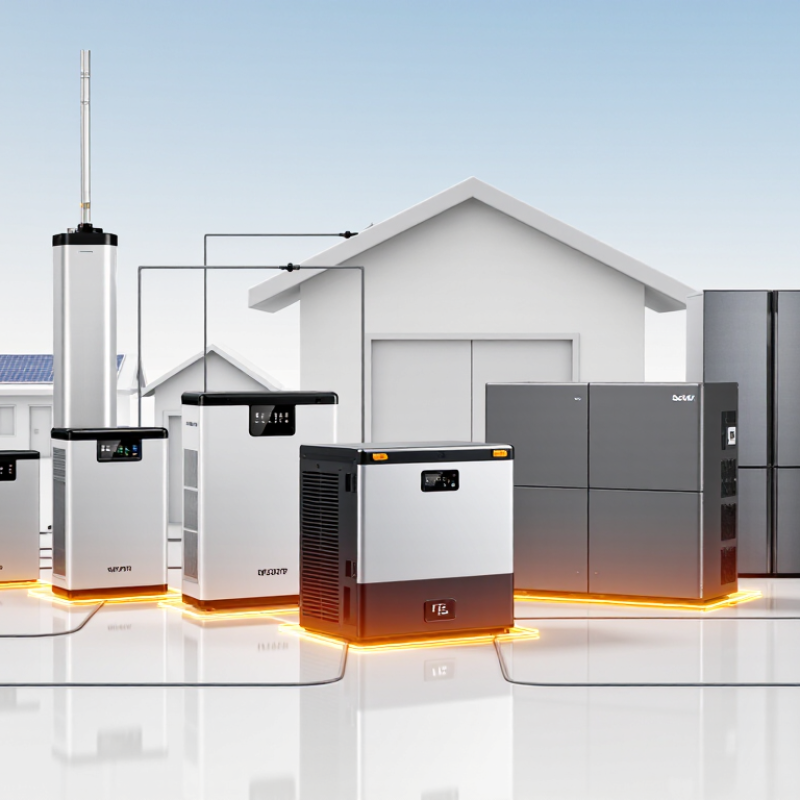
Top 10 Solar Backup Batteries for Home and Business

What Solar Backup Batteries Are and How They Work

Solar backup batteries store electricity generated by rooftop panels for later use. During sunny hours, panels produce direct current, while a charge controller manages the battery’s charging rate. An inverter then converts stored direct current into alternating current for household appliances. At night or during an outage, the system automatically supplies selected circuits, such as lights, refrigerators, or communication equipment.

Capacity describes how much energy a battery can hold, usually measured in kilowatt-hours. Power rating shows how much electricity it can deliver at one moment. A battery with high capacity may still struggle with a large pump or heating appliance. This distinction matters when planning a home or business system. For example, a small office may need steady power for computers, while a house may require a brief surge for a refrigerator motor.

Lithium-based batteries are common because they offer useful energy density and efficient cycling. Their actual performance depends on temperature, installation quality, age, and charging habits. A battery management system monitors voltage and temperature to reduce operating risks. Professional installation should include ventilation, fire protection, compatible wiring, and a clearly labeled shutdown procedure. I have found that real energy use often differs from estimates, especially during winter. Oversizing can waste money, while undersizing causes frequent interruptions. A practical design checks hourly demand, outage length, solar production, and critical loads before selecting equipment.

Key Battery Types, Specifications, and Performance Factors

Choosing among the top ten solar backup batteries requires more than comparing headline capacity. Lithium iron phosphate batteries offer strong thermal stability and long cycle life. Nickel manganese cobalt systems usually deliver higher energy density, but require stricter thermal management. Lead-acid batteries remain affordable, although their usable capacity and cycle life are generally lower. Sodium-ion technology is emerging, but field data remains limited.

Start with usable capacity, not the advertised number. A 10 kWh battery may provide only 8 kWh at an 80% depth of discharge. Check continuous power, surge power, round-trip efficiency, and inverter compatibility. NREL’s 2024 Annual Technology Baseline commonly models lithium-ion storage near 85% to 90% round-trip efficiency. That difference matters when a refrigerator, pump, and internet system run overnight. It matters more during winter.

Performance also depends on temperature, charging speed, installation quality, and maintenance. The International Energy Agency reported that global battery storage additions rose sharply in 2023, reflecting stronger demand for flexible electricity systems. Yet laboratory ratings can disappoint in dusty garages or poorly ventilated utility rooms. I would compare warranty cycle limits, capacity retention, operating temperature, and replacement terms. Look for clear evidence. Not every “10-year” warranty guarantees ten years of full performance. A small battery with higher power may serve essential loads better than a larger unit with weak output. My own judgment would remain cautious where independent field testing is missing.

Top 10 Solar Backup Batteries for Home and Business - Key Battery Types, Specifications, and Performance Factors

Rank Battery Type Chemistry Typical Nominal Voltage Typical Usable Capacity Usable Depth of Discharge Round-Trip Efficiency Expected Cycle Life Typical Continuous Power Operating Temperature Best-Fit Applications Main Performance Considerations
1 Residential Wall-Mounted Battery Lithium iron phosphate (LFP) 48–51.2 V DC 10–16 kWh 90–100% 90–97% 4,000–8,000 3–8 kW 0–45°C charging
−20–55°C discharging
Homes, essential-load backup, daily solar shifting Strong safety profile, long service life, compact installation, and low routine maintenance.
2 Modular Rack-Mounted Battery Lithium iron phosphate (LFP) 48–51.2 V DC 10–100+ kWh 90–100% 90–97% 4,000–8,000 5–50 kW 0–45°C charging
−20–55°C discharging
Larger homes, small offices, telecommunications, and microgrids Scales easily by adding modules; requires compatible battery-management and inverter systems.
3 High-Voltage Modular Battery Lithium iron phosphate (LFP) 150–600 V DC 10–80 kWh 90–100% 92–98% 4,000–8,000 5–30 kW 0–45°C charging
−20–55°C discharging
Whole-home backup and high-power residential or light-commercial systems Lower current at higher power can reduce cable losses, but installation requires high-voltage safety controls.
4 Nickel-Manganese-Cobalt Battery Lithium nickel-manganese-cobalt oxide (NMC) 48–400 V DC 5–20 kWh 80–95% 90–96% 2,000–5,000 3–10 kW 0–45°C charging
−20–55°C discharging
Space-constrained homes requiring high energy density Higher energy density than many LFP systems, but thermal management and enclosure protection are especially important.
5 AGM Lead-Acid Battery Bank Absorbent glass mat lead-acid 12 or 24 V DC modules 2–20 kWh 50–80% 70–85% 500–1,200 1–10 kW −15–50°C Low-cost backup, cabins, small off-grid systems, and occasional outages Lower upfront cost, but heavier, less efficient, and less suitable for frequent deep cycling.
6 Flooded Lead-Acid Battery Bank Flooded deep-cycle lead-acid 12 or 24 V DC modules 2–20 kWh 50–80% 70–85% 800–1,500 1–10 kW −15–50°C Off-grid locations with ventilated battery rooms and regular maintenance access Requires ventilation, electrolyte checks, and water replenishment; sensitive to prolonged partial charging.
7 Lithium-Titanate Battery Lithium titanate (LTO) 48–800 V DC 5–100+ kWh 90–100% 90–98% 10,000–30,000 5–100 kW −30–55°C High-cycle commercial backup, extreme climates, and rapid-charge applications Excellent cycle durability and low-temperature performance, but usually higher cost and lower energy density.
8 Sodium-Ion Battery Sodium-ion 48–400 V DC 5–100 kWh 80–95% 85–95% 2,000–6,000 3–50 kW −20–45°C Cost-sensitive stationary storage and moderate-climate backup systems Uses more widely available sodium materials, but commercial availability and energy density vary by design.
9 Vanadium Redox Flow Battery Aqueous vanadium electrolyte System-dependent DC bus 20 kWh–multi-MWh 75–100% 65–85% 12,000–25,000+ 10 kW–multi-MW Typically 10–40°C Long-duration commercial storage, renewable-energy farms, and grid support Very long cycle life and low fire risk; larger footprint, pumps, and higher installation complexity are required.
10 Commercial Outdoor Battery Cabinet Lithium iron phosphate (LFP) 600–1,500 V DC 100 kWh–5 MWh 90–100% 85–95% 4,000–8,000 50 kW–2 MW −20–50°C with thermal management Factories, retail facilities, data centers, peak shaving, and demand-charge management Integrated cooling, fire detection, battery management, and power-conversion equipment improve commercial readiness.

Note: Values are representative industry ranges for comparable stationary-storage systems. Actual capacity, power, efficiency, temperature limits, cycle life, certifications, and warranty conditions vary by cell design, battery-management system, inverter, installation method, and operating profile. Usable capacity is calculated after the recommended depth-of-discharge limit.

How to Compare the Top 10 Solar Backup Batteries

Top 10 Solar Backup Batteries for Home and Business

How to Compare the Top 10 Solar Backup Batteries

Comparing solar backup batteries requires more than checking storage capacity. Start with usable energy, not the advertised total. A battery rated at 10 kilowatt-hours may deliver less after reserve limits and conversion losses. Match its continuous power output to real appliances, such as refrigerators, pumps, servers, or workshop tools. Short power surges matter too.

Round-trip efficiency shows how much stored solar energy returns to your loads. Higher efficiency usually means less wasted electricity. Check cycle life, expected degradation, and the warranty’s remaining-capacity promise. A battery used daily faces different demands from one reserved for rare outages. Lithium iron phosphate systems often offer strong thermal stability, but installation conditions still matter. Keep the unit away from flooding, extreme heat, and blocked ventilation.

During practical comparisons, I also examine monitoring quality. Clear data should show charge level, power flow, temperature, and fault alerts. Safety certifications and qualified installation deserve equal attention. For businesses, calculate the cost of downtime and include peak-demand control. For homes, measure essential loads during an evening outage. A spreadsheet can mislead. I once underestimated a water pump’s starting surge, which changed the required inverter size. Price alone cannot reveal service quality, replacement costs, or actual performance after several years. Ask for test conditions, not just impressive figures.

Top 10 Solar Backup Batteries for Home and Business

How to Compare the Top 10 Solar Backup Batteries

This brand-neutral comparison uses rounded, publicly stated specifications from residential and small-business battery systems. Usable energy indicates the storage available for backup loads, while the tooltip also shows continuous output, round-trip efficiency, and warranty period. Higher capacity and output are useful for larger loads; higher efficiency reduces energy losses.

Best Battery Options for Homes, Businesses, and Different Needs

Choosing among the top 10 solar backup batteries depends on the building, not popularity. Homes often need compact systems for evening loads, refrigeration, and short outages. Businesses may require larger capacity, rapid transfer, and scalable cabinets. Lithium iron phosphate batteries suit many homes because they offer strong cycle life and stable thermal performance. Lead-acid systems remain cheaper upfront, but they need more space and regular replacement.

Capacity is only one number. Check usable kilowatt-hours, continuous power, surge output, round-trip efficiency, warranty terms, and cold-weather performance. A family using 25 kilowatt-hours daily may need more than a 10-kilowatt-hour battery during cloudy periods. An office with servers needs dependable power quality, not merely extended runtime. The International Energy Agency’s Renewables 2024 report says global energy storage capacity must increase sixfold by 2030, highlighting the growing importance of reliable storage planning.

Commercial buyers should compare modular lithium systems, flow batteries, and emerging sodium-ion options. Flow batteries can support long-duration operation, while sodium-ion designs may reduce dependence on scarce materials. Lazard’s Levelized Cost of Storage analysis shows that costs vary sharply by duration, application, and financing. NREL’s Storage Futures Study also emphasizes that system value depends on operation, grid conditions, and use patterns. Rankings can mislead. A technically impressive battery may perform poorly when installed without load analysis, ventilation planning, or realistic outage data. Professional installation still matters.

Installation, Maintenance, Safety, and Long-Term Ownership Costs

When comparing the top ten solar backup batteries, installation quality matters as much as capacity. A qualified electrician should check the main panel, cable paths, grounding, and local requirements. The battery needs a dry, ventilated location with clear access for service. Avoid placing it beside heaters, fuel storage, or areas that collect water. Wall strength also matters. A full unit can be surprisingly heavy. Cable connections should be tightened to the specified torque, not guessed by hand.

Maintenance is usually simple, but it is not optional. Inspect terminals, vents, and warning lights every few months. Dust can gather around cooling openings, especially in workshops or garages. Review the monitoring data for unusual temperature changes or sudden capacity loss. Keep firmware and protection settings updated through approved service channels. Never open the battery enclosure yourself. Stop using the system after swelling, smoke, liquid leakage, or repeated shutdowns, and contact a qualified technician. Small warning signs become expensive failures.

Long-term ownership includes more than the purchase price. Compare usable capacity, round-trip efficiency, installation labor, monitoring fees, and eventual replacement costs. A larger battery may waste money if daily consumption is low. High temperatures can shorten service life, even when the system appears normal. I have seen owners focus on backup hours and overlook ventilation. That choice can age equipment faster. Estimates are imperfect. Household demand, weather, and charging habits change over time. Leave room in the budget for inspections, electrical repairs, and capacity decline.

FAQS

Should I compare advertised capacity or usable capacity?

Compare usable capacity first. A 10 kWh battery may provide only 8 kWh at an 80% discharge limit. Conversion losses reduce it further. Advertised figures can mislead.

How much power should a home backup battery provide?

Match continuous output with your essential appliances. Include refrigerators, pumps, internet equipment, and heating systems. Check starting surges carefully. Pumps can briefly demand much more power.

Which battery chemistry is suitable for regular home use?

Lithium iron phosphate batteries usually offer strong thermal stability and long cycle life. Nickel-based systems often provide higher energy density. They need stricter temperature control. Lead-acid batteries cost less but usually deliver fewer usable cycles.

What does round-trip efficiency mean?

It shows how much stored energy returns to your appliances. An efficiency near 85% to 90% is common in planning models. Higher efficiency wastes less electricity. Winter losses may feel more noticeable.

Does temperature affect battery performance?

Yes. Extreme heat, cold, dust, and blocked ventilation can reduce performance. Avoid flooding and poorly ventilated utility rooms. A cool, dry location is safer.

What should I check in a battery warranty?

Check cycle limits, capacity retention, operating temperatures, and replacement terms. A “10-year” warranty may not promise full performance for ten years. Read the remaining-capacity conditions closely.

What monitoring information should a battery provide?

Useful monitoring shows charge level, power flow, temperature, and fault alerts. Clear data can reveal problems early. A simple display is better than confusing detail.

How should businesses compare backup batteries?

Calculate the cost of downtime and possible peak-demand savings. Match output with servers, pumps, and workshop equipment. Include installation and replacement costs. My estimate may still miss unusual surge loads.

Conclusion

Solar Backup Batteries store excess energy generated by solar panels and release it when sunlight is limited, during power outages, or when electricity demand is high. This guide explains how these systems work and compares important battery types, including their capacity, power output, efficiency, usable energy, lifespan, charging speed, and warranty considerations. It also shows how to evaluate the top 10 options based on reliability, expandability, compatibility with solar equipment, operating conditions, and overall value.

Different solutions may be better suited to homes, small offices, commercial buildings, or users with specific priorities such as emergency backup, daily energy savings, or high-power performance. The article also covers practical factors that influence long-term ownership costs, including installation requirements, monitoring, routine maintenance, safety features, replacement planning, and energy management. By considering both technical performance and real-world needs, readers can choose Solar Backup Batteries that provide dependable, efficient, and cost-conscious energy storage.


Charlotte

Charlotte

Charlotte is a seasoned marketing professional with a deep understanding of the company's portfolio and a passion for elevating its presence in the market. With a keen eye for detail and a commitment to excellence, she ensures that our professional blog is regularly updated with insightful articles......