Choosing the 2026 best Solar Battery For House requires more than comparing capacity and brand names. A battery sits beside your inverter, meter, roof, and daily habits. It must store afternoon solar energy, then deliver dependable power when the lights are on after sunset.
The International Energy Agency’s Batteries and Secure Energy Transitions report states that global battery storage deployment must expand sharply this decade. This growth reflects rising renewable generation and the need for flexible electricity systems. SolarPower Europe’s Global Market Outlook also shows continued solar expansion across residential and commercial markets. More rooftop solar means more households will need practical ways to use surplus electricity.
A suitable home battery should match your annual consumption, solar output, backup expectations, and local electricity tariffs. Check usable capacity, continuous power, round-trip efficiency, warranty terms, thermal protection, and installation compatibility. A 10 kWh battery may sound impressive. Yet it could be oversized for a small apartment or insufficient for a large home with a heat pump.
The U.S. Department of Energy and National Renewable Energy Laboratory emphasize system design, safety, degradation, and operating conditions. These details matter more than promotional claims. Battery performance changes with temperature and charging patterns. I have also found that “best” often depends on imperfect household data. That is worth admitting.
This guide compares leading 2026 options through a practical, evidence-based lens. It considers daily savings, outage resilience, lifecycle value, and installation realities. The right choice should feel reliable at 7 p.m., not merely impressive on a specification sheet.
What Is a Solar Battery and How Does It Work?
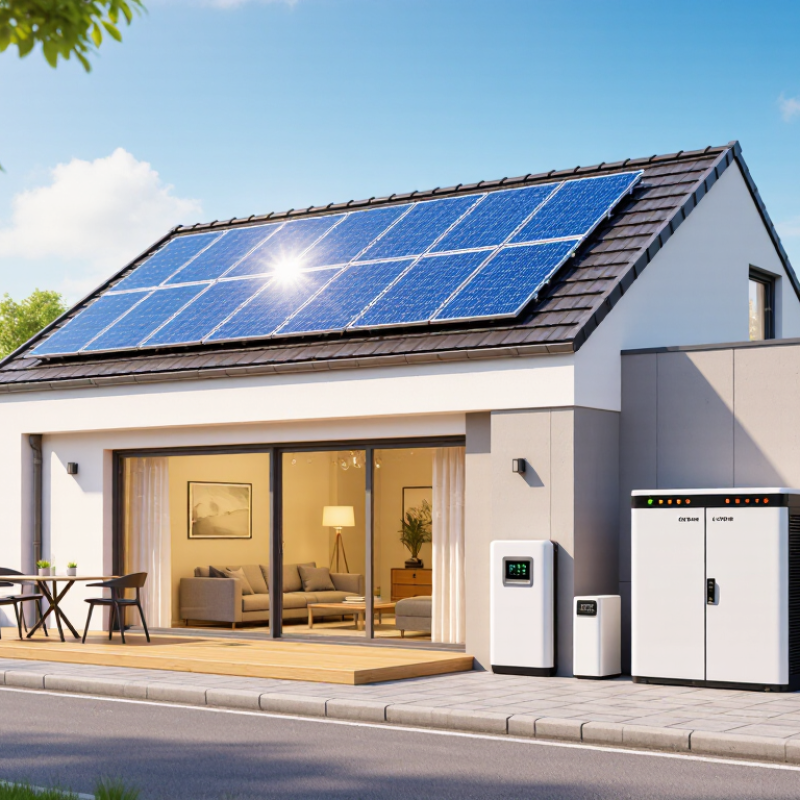
A solar battery stores electricity for use after the sun goes down. Solar panels produce direct-current electricity during daylight hours. An inverter changes it into alternating current for household appliances. A charge controller manages the flow into the battery. The battery stores surplus power chemically. When sunlight fades, the inverter releases that energy for lights, refrigerators, or other circuits. Simple in principle.
Most home systems use lithium-ion cells because they offer strong energy density and efficient cycling. During the day, your home uses solar power first. Excess electricity charges the battery. At night, stored energy supplies selected appliances. If production and storage are insufficient, the home draws electricity from the grid. A battery does not create energy. It only shifts energy through time.
When choosing a 2026 solar battery, check usable capacity, continuous power, round-trip efficiency, and backup compatibility. Usable capacity matters more than the headline capacity. A battery may store ten kilowatt-hours but deliver less after safety limits. Power rating determines whether it can start a pump or run several appliances together. Installation location also matters. A hot garage can reduce performance. Real homes are less tidy than spreadsheets. Weather, shading, and changing routines can weaken original estimates. A larger battery is not automatically better. Ask for load calculations, safety documentation, maintenance requirements, and clear warranty terms before installation.
Which Solar Battery Types Are Available for Homes?
Lithium-ion batteries dominate home energy storage because they are compact, efficient, and widely supported by installers. The International Energy Agency’s Batteries and Secure Energy Transitions report identifies lithium-ion technology as the leading choice for new battery storage deployments. Within this group, lithium iron phosphate, or LFP, offers strong thermal stability and long cycle life. Nickel manganese cobalt, or NMC, usually stores more energy in less space. That advantage matters in a small utility room.
Lead-acid batteries remain familiar and affordable, but they need more space and usually tolerate less usable discharge. They can suit simple backup systems, though their shorter service life may weaken the original price advantage. Flow batteries use liquid electrolytes in separate tanks. The U.S. Department of Energy describes them as promising for long-duration storage, but residential systems remain uncommon. They need room. Sodium-ion batteries are also emerging. The IEA notes their potential for lower-cost storage and reduced dependence on critical minerals, yet household availability is still limited.
Technology is only part of the decision. A battery’s usable capacity, round-trip efficiency, operating temperature, warranty terms, and safety testing deserve equal attention. Look for systems evaluated under recognized standards, such as UL 9540 and UL 9540A, where applicable. My first choice would often be LFP, but that shortcut can mislead. A shaded home with modest evening demand may need a smaller battery, while frequent outages require careful load measurements and realistic winter data. Estimates often look cleaner than real life.
How to Calculate Your Home’s Solar Battery Capacity
2026 Best Solar Battery for House: How to Choose
How to Calculate Your Home’s Solar Battery Capacity
Battery size should follow your actual load, not your roof area. The U.S. Energy Information Administration reports that American homes used about 886 kWh monthly in 2023. That equals roughly 29 kWh daily, but household patterns differ greatly. Review twelve months of utility bills, then identify essential circuits, such as refrigeration, lighting, internet equipment, and medical devices.
Use this practical formula: required battery capacity equals daily critical-load energy multiplied by backup days, divided by usable depth of discharge and system efficiency. For example, a home needing 12 kWh daily and 1.5 backup days requires 18 kWh of usable energy. Assuming 80% usable depth and 90% round-trip efficiency, the nameplate battery should be about 25 kWh. Keep some margin.
Do not size from averages alone. A heating system can create a sharp winter peak. A well pump may demand high starting power. The National Renewable Energy Laboratory recommends modeling hourly load profiles when evaluating distributed energy storage. The International Energy Agency reported that lithium-ion battery pack prices fell by about 90% between 2010 and 2023, yet installation, controls, and replacement costs still matter. My first estimate might look too generous. Solar production also changes with clouds, season, and shading. Check the battery’s continuous output, surge rating, warranty assumptions, and expected temperature range before choosing capacity. Bigger is not automatically better.
2026 Best Solar Battery for House: How to Choose? — How to Calculate Your Home’s Solar Battery Capacity
| Household Profile |
Average Daily Energy Use |
Backup Duration |
Required Usable Capacity |
Recommended Nominal Battery |
Recommended Continuous Output |
Typical Applications |
| Essential Loads |
8 kWh/day |
12 hours |
4 kWh |
5–6 kWh |
3–5 kW |
Refrigerator, lights, Wi-Fi, security system, medical equipment |
| Small Home |
12 kWh/day |
12 hours |
6 kWh |
7–8 kWh |
4–6 kW |
Basic appliances, lighting, refrigeration, electronics |
| Average Home |
20 kWh/day |
12 hours |
10 kWh |
12–14 kWh |
5–8 kW |
Whole-home essentials, kitchen appliances, pumps, entertainment |
| Large Home |
30 kWh/day |
12 hours |
15 kWh |
18–21 kWh |
8–12 kW |
Multiple refrigerators, large kitchen, water pumps, selected heating or cooling |
| High-Consumption Home |
40 kWh/day |
24 hours |
40 kWh |
48–56 kWh |
10–15 kW |
Extended backup, electric vehicle charging, heating or cooling loads |
Capacity Calculation
Usable battery capacity = Daily energy use × Backup days × Critical-load percentage
Nominal Capacity Calculation
Nominal capacity = Required usable capacity ÷ (Usable depth of discharge × System efficiency)
Example
20 kWh/day × 0.5 day × 100% = 10 kWh usable; 10 ÷ (0.90 × 0.92) ≈ 12.1 kWh nominal
| Selection Factor |
Practical Target |
Why It Matters |
| Usable Depth of Discharge |
80–95% |
A higher usable percentage provides more available energy from the same nominal battery size. |
| Round-Trip Efficiency |
85–95% |
Charging and discharging losses reduce the energy delivered to household loads. |
| Continuous Output |
At least the maximum simultaneous load |
The battery inverter must run the appliances that may operate at the same time. |
| Surge Output |
2–3 times motor running power |
Motors in pumps, refrigerators, and compressors can require a short startup surge. |
| Battery Chemistry |
Lithium iron phosphate for many residential systems |
This chemistry is commonly selected for thermal stability, cycle life, and regular daily use. |
| Temperature Range |
Use manufacturer-approved operating limits |
Very high or low temperatures can reduce performance, charging capability, and service life. |
| Future Expansion |
Reserve 20–30% system capacity |
Extra capacity can accommodate future loads such as an electric vehicle, heat pump, or home office. |
Note: The figures are planning ranges based on common residential load profiles. Actual sizing should use at least 12 months of utility data, appliance power ratings, local solar production, required backup duration, and the battery system’s certified specifications.
Which Features Matter When Comparing Solar Batteries?
When comparing solar batteries for a house, usable capacity matters more than the headline capacity. A 10 kWh battery may provide less after reserve limits and conversion losses. Check round-trip efficiency, minimum backup level, and expected capacity after ten years. Those figures reveal more than a large number on a sales sheet.
Match the battery to your daily load pattern. A family using 6 kWh overnight may not need a 20 kWh system. Review hourly consumption from your electricity monitor, especially evening cooking, heating, and vehicle charging. Power rating matters too. A battery with plenty of energy may still struggle with a kettle, pump, and refrigerator starting together.
Safety features deserve close attention. Look for tested thermal protection, certified installation requirements, weather resistance, and clear operating temperature limits. If the battery sits in a garage, winter temperatures and ventilation can affect performance. Confirm inverter compatibility, blackout switching speed, monitoring quality, and whether local technicians can service the system. Warranty language can be surprisingly vague. Read cycling limits, replacement conditions, and performance guarantees carefully. Datasheet efficiency may reflect ideal laboratory conditions, not a dusty cupboard beside a warm wall. I would also question an oversized system, even when the price seems attractive; unused capacity can represent poor planning rather than future readiness.
How to Choose the Best Solar Battery for Your House in 2026?
Choosing the best solar battery for your house in 2026 starts with your daily energy habits. Review twelve months of electricity bills, then identify evening and overnight loads. A refrigerator, router, lights, and medical equipment may need power after sunset. Measure actual demand instead of guessing.
Compare usable capacity, not only the advertised battery size.
Check round-trip efficiency, operating temperature, cycle life, and the warranty’s performance guarantee. Your inverter must match the battery’s voltage and communication system. A qualified installer should confirm local electrical requirements and provide written protection details. Look for independent safety testing and clear maintenance procedures. Do not rely on sales estimates alone.
My first battery calculation was too optimistic.
I focused on sunny summer days and ignored several cloudy winter evenings. That mistake matters. A household using 12 kilowatt-hours nightly may need more storage than its solar array can reliably refill. Consider reserve power, peak loads, and whether the system can operate during an outage. Ask how the battery behaves at low temperatures and what happens after its warranty period. Installation space also matters; a shaded, dry, ventilated wall is safer than a cramped utility corner. Prices can be compared through total lifetime cost, including installation, replacement parts, and lost energy. Cheap storage is not always economical. Your consumption may change, too. Recheck the design after adding an electric vehicle, heat pump, or home office.
Conclusion
Choosing the best Solar Battery For House in 2026 starts with understanding how energy storage works. A solar battery stores extra electricity produced by rooftop panels during the day and supplies power when sunlight is limited, helping reduce grid dependence and improve energy availability. Homeowners can compare different battery types, including lithium-based and other storage technologies, by considering their efficiency, lifespan, safety, maintenance needs, and installation requirements.
The right capacity depends on household electricity usage, solar production, backup goals, and the number of hours of autonomy required. When comparing options, pay attention to usable capacity, power output, round-trip efficiency, charging speed, operating temperature, warranty coverage, monitoring functions, and compatibility with the existing solar system. In 2026, the ideal choice should balance performance, reliability, safety, expandability, and total long-term value rather than focusing only on the initial price.

 Elemro Energy