Choosing among the 10 Best Solar Energy Storage Systems for Global Buyers requires more than comparing battery capacity and price. Solar Energy Storage Systems must match local sunlight, grid conditions, household demand, and installation practices. A compact home battery may suit a city apartment, while a larger system could support a rural workshop or small business.
This guide examines lithium-ion and other established storage technologies through practical buying criteria. These include usable capacity, round-trip efficiency, backup performance, safety controls, warranty terms, monitoring tools, and service availability. It also considers temperature tolerance, certification requirements, inverter compatibility, and future expansion. Details matter. A battery placed in a hot garage faces different risks from one installed in a shaded utility room.
Performance looks different in real life.
Global buyers should also review local regulations and installer qualifications before making a purchase. Manufacturer claims can be useful, but independent testing, transparent warranty language, and documented field experience deserve equal attention. Prices and product availability may change quickly across regions, so no ranking remains perfect for every market. Some comparisons depend on limited public data. That limitation deserves honest reflection.
The systems highlighted here are intended to clarify choices, not replace professional design advice. A qualified installer can verify electrical loads, roof generation, emergency backup needs, and safe placement. With careful evaluation, buyers can select storage that reduces wasted solar power and supports dependable energy use over many years. Reliability is rarely dramatic; it is the quiet battery that performs when clouds arrive or the grid goes down.
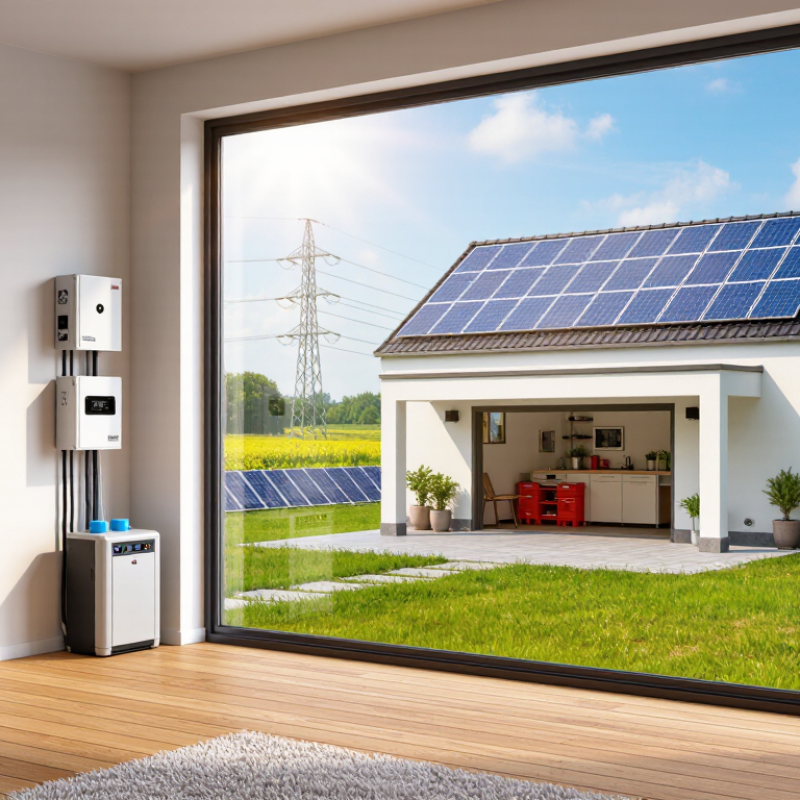
Solar energy storage systems capture surplus electricity and release it when solar production falls. They help households, businesses, and remote facilities manage variable sunlight. Think of them as buffers. During bright midday hours, photovoltaic panels produce power for immediate loads and battery charging. After sunset, stored electricity supports lighting, refrigeration, pumps, or production equipment.
A complete system usually includes battery cells, a battery management system, an inverter, a charge controller, sensors, protection devices, and thermal management. The battery stores energy chemically. The inverter changes direct current into alternating current for ordinary appliances. The battery management system monitors voltage, temperature, and state of charge. It can disconnect unsafe circuits. In larger installations, an energy management controller coordinates batteries, solar arrays, generators, and the utility grid.
Operating principles are straightforward, but real performance depends on details. The controller directs excess solar power into the battery during charging. When demand rises, the inverter supplies electricity from stored energy. Round-trip efficiency, usable capacity, depth of discharge, and response time affect daily results. Global buyers should examine local temperatures, humidity, grid frequency, installation space, service access, and safety certifications. A datasheet rarely shows dust, weak ventilation, or repeated partial charging. Not every installation behaves perfectly. Oversizing the battery can also waste capital when nighttime demand remains low. Practical monitoring, regular inspections, and clear warranty conditions often matter as much as rated capacity.
A practical comparison of common solar-plus-storage system configurations for residential, commercial, industrial, and off-grid applications
| Rank | System Configuration | Recommended Application | Battery Chemistry | Typical Usable Capacity | Typical Power Rating | Round-Trip Efficiency | Expected Service Life | Main Components | Operating Principle | Key Advantages | Important Considerations |
|---|---|---|---|---|---|---|---|---|---|---|---|
| 1 | Residential AC-Coupled Battery System | Homes and small buildings | Lithium iron phosphate (LFP) | 5–30 kWh | 3–15 kW | 85–92% | 10–15 years or approximately 4,000–7,000 cycles | Solar inverter, battery modules, battery management system, bidirectional inverter, energy meter, gateway, protective devices | Solar electricity is converted to AC for household loads. Surplus power is converted back to DC and stored in the battery; the battery later supplies AC power through the inverter. | Can be added to an existing solar installation; flexible retrofit design; backup capability; modular capacity expansion | Two conversion stages can cause more energy losses than a DC-coupled design; compatible inverter and control equipment are required. |
| 2 | Residential DC-Coupled Battery System | New solar installations | Lithium iron phosphate (LFP) | 5–40 kWh | 3–20 kW | 88–95% | 10–15 years or approximately 4,000–7,000 cycles | PV modules, DC/DC charge controller, battery modules, battery management system, hybrid inverter, energy management system | Solar DC power is routed directly to the battery or inverter DC bus, reducing unnecessary AC-to-DC and DC-to-AC conversions before household use. | High solar-to-battery efficiency; efficient clipping recovery; well suited to hybrid inverter architectures | Less convenient for some retrofits; system design must coordinate PV voltage, battery voltage, and inverter limits. |
| 3 | Modular Stackable Home Storage System | Homes with changing demand | LFP | 10–60 kWh | 5–30 kW | 87–94% | 10–15 years or approximately 4,000–8,000 cycles | Stackable battery modules, battery management system, hybrid inverter, communication controller, enclosure, circuit protection | Identical battery modules are connected in parallel or series under centralized monitoring, allowing capacity and power to grow with the load. | Scalable installation; simplified logistics; easier replacement of individual modules; suitable for phased investments | Module compatibility, thermal spacing, communication protocols, and maximum parallel-string limits must be verified. |
| 4 | High-Voltage Hybrid Solar Storage System | Large homes and small businesses | LFP | 10–100 kWh | 10–50 kW | 89–95% | 10–15 years or approximately 5,000–8,000 cycles | High-voltage battery rack, hybrid inverter, battery management system, DC protection, isolation monitoring, energy management software | Series-connected battery modules create a higher DC voltage, reducing current for a given power level and allowing efficient interaction with a hybrid inverter. | Lower cable current; efficient power conversion; good support for high-power loads; reduced balance-of-system cabling | Requires trained installation and high-voltage safety procedures; insulation monitoring and isolation protection are essential. |
| 5 | Commercial Outdoor Battery Cabinet | Retail, offices, farms, and workshops | LFP | 50–500 kWh | 30–250 kW | 85–93% | 10–15 years or approximately 4,000–7,000 cycles | Battery racks, bidirectional power conversion system, thermal management, fire detection, access control, energy management system, switchgear | The system stores daytime solar surplus and discharges during evening peaks or high-tariff periods while controlling charge and discharge power automatically. | Peak-demand reduction; compact outdoor deployment; integrated protection and thermal management; scalable by cabinet | Requires suitable foundation, clearances, ventilation or cooling, fire-safety planning, and compliance with local electrical codes. |
| 6 | Containerized Utility-Scale Battery System | Solar farms and grid projects | LFP | 1–10 MWh per container | 0.5–5 MW per container | 85–93% | 10–20 years or approximately 4,000–8,000 cycles | Battery racks, container enclosure, power conversion system, transformer, medium-voltage switchgear, HVAC, fire suppression, monitoring and controls | Multiple battery containers absorb excess solar generation and dispatch stored electricity according to grid signals, power prices, or renewable-energy schedules. | Large capacity; repeatable project design; supports energy shifting, frequency regulation, and renewable integration | Interconnection studies, transportation, land use, fire protection, degradation management, and grid-code compliance affect project feasibility. |
| 7 | Solar Microgrid Energy Storage System | Campuses, communities, and critical facilities | LFP or sodium-ion | 100 kWh–20 MWh | 50 kW–10 MW | 80–93% | 10–20 years, depending on chemistry and duty cycle | Solar array, battery system, microgrid controller, inverter, generator interface, switchgear, protection relays, communications network | The controller balances solar generation, battery state of charge, local loads, and grid or generator sources. It can isolate the local network and operate in island mode. | Resilience during grid outages; coordinated operation of several energy sources; supports critical-load prioritization | Control logic, protection coordination, black-start capability, and islanding requirements need detailed engineering. |
| 8 | Off-Grid Solar Battery System | Remote homes and rural facilities | LFP | 10–200 kWh | 3–100 kW | 82–92% | 10–15 years or approximately 4,000–7,000 cycles | PV modules, MPPT charge controller, battery bank, off-grid inverter, backup generator interface, monitoring system, DC and AC protection | Solar power serves loads and charges the battery. Stored energy supplies loads when sunlight is insufficient, while a generator may provide backup during extended low-solar periods. | Independent operation; useful where grid extension is costly; can provide reliable power for essential loads | Capacity must account for seasonal solar variation, cloudy periods, load growth, generator support, and battery reserve limits. |
| 9 | Second-Life Battery Solar Storage System | Stationary, low-cost applications | Reused lithium-ion cells, subject to testing | 50 kWh–5 MWh | 25 kW–2 MW | 75–88% | Typically 5–10 additional years, depending on original use and testing | Tested battery modules, battery management system, power conversion system, thermal controls, enclosure, protection equipment, state-of-health monitoring | Retired electric-vehicle or industrial battery modules are tested, reconfigured, and operated at a stationary duty cycle with conservative voltage and temperature limits. | Potentially lower initial material cost; extends useful battery life; suitable for less demanding energy-shifting applications | Cell history and state of health can vary; warranty, certification, thermal management, and module matching require careful review. |
| 10 | Long-Duration Flow Battery Solar System | Grid support and long-duration storage | Vanadium or other aqueous electrolyte systems | 100 kWh–100 MWh | 50 kW–50 MW | 65–85% | 15–25 years or approximately 10,000–20,000 cycles | Electrolyte tanks, pumps, stack modules, power conversion system, control system, heat management, containment and safety equipment | Solar-generated electricity drives an electrochemical reaction in separate electrolyte tanks. Increasing tank volume increases energy capacity, while stack size primarily determines power. | Very high cycle durability; low fire risk for many aqueous designs; independent sizing of power and energy; suitable for multi-hour discharge | Lower round-trip efficiency and larger footprint than many lithium-ion systems; pumping, electrolyte management, and project-scale economics are important. |
Selection principle: Choose the system by matching storage duration, power demand, backup requirements, installation environment, safety standards, lifecycle cost, and local grid rules—not by capacity alone.
Compare usable capacity, round-trip efficiency, degradation, warranty terms, and installation costs. Price alone misleads. Laboratory results may not match field performance.
A two-hour system may support frequency control. A four-hour system may cover evening demand. The best duration depends on tariffs, grid needs, and solar output.
Heat, humidity, dust, salt air, and high altitude can accelerate capacity loss. A hot garage is a poor location. Check spare-part access and technician response times.
Look for thermal management, fire detection, emergency shutdowns, and protection against short circuits. Keep shutdown instructions beside the equipment. Certificates may not cover the complete installation.
Record household electricity use for several weeks. Include motor starting surges from pumps or refrigerators. One winter estimate may cause costly oversizing.
Homeowners often need quiet backup for evening loads. Small businesses may require modular systems for refrigerators, servers, or pumps. Farms may need weather-resistant storage for irrigation and cold rooms.
Include installation, wiring upgrades, ventilation, monitoring, inspections, software fees, and possible replacement parts. Repeated service visits can change the calculation. Keep a repair reserve.
Review voltage changes, temperature readings, cycling patterns, and usable capacity. Monitoring can reveal unusual behavior early. It is not perfect. Independent acceptance testing remains valuable.
Solar Energy Storage Systems allow homes, businesses, and industrial facilities to store surplus electricity generated by solar panels and use it when sunlight is limited or energy demand is high. This article explains their main components, including batteries, inverters, control systems, safety devices, and monitoring tools, as well as the basic charging, discharging, and energy-management principles. It also presents ten system types suited to different buyer needs, such as residential backup, commercial peak-shaving, off-grid operation, and large-scale renewable integration.
For global buyers, selecting the right system requires careful comparison of storage capacity, power output, efficiency, lifespan, scalability, warranty conditions, and total ownership cost. Regional regulations, climate, installation space, grid standards, and compatibility with existing solar equipment are equally important. The article also reviews maintenance requirements, fire and electrical safety, recycling considerations, and long-term performance, helping buyers make practical, reliable, and future-ready energy storage decisions.

 Elemro Energy