2026 Top Solar Batteries for House Which One Is Best?

Time:2026-10-26 Author:Isabella
0%

Choosing among the 2026 Top Solar Batteries for House requires more than comparing storage capacity or glossy efficiency claims. A home battery sits beside real routines: evening cooking, overnight refrigeration, cloudy mornings, and occasional outages. The best system must match those loads, the rooftop array, local electricity rates, and the homeowner’s backup expectations.

Industry evidence shows why this decision matters. The International Energy Agency’s Batteries and Secure Energy Transitions report says global energy storage capacity must increase sixfold by 2030 to support clean-energy goals. BloombergNEF reported that average lithium-ion battery-pack prices fell to about $115 per kilowatt-hour in 2024. Lower prices help, but they do not guarantee better household value. Installation costs, usable capacity, degradation, software, and warranty conditions still shape the payback period.

Details matter most.

Imre Gyuk, a long-time U.S. Department of Energy energy-storage expert, has said, “Energy storage is the key to the future of renewable energy.” His statement reflects a practical truth: solar panels generate power by daylight, while households often need it after sunset. A 10-kilowatt-hour battery may cover essential evening loads, yet it may not run electric heating, cooking, and vehicle charging together. That assumption needs testing.

This guide compares leading Solar Batteries For House options through measurable criteria, including round-trip efficiency, continuous output, usable energy, cycle warranties, safety design, temperature performance, and installer support. Some recommendations may be imperfect. Product availability changes, and a technically excellent battery can still disappoint when sizing or installation is careless.
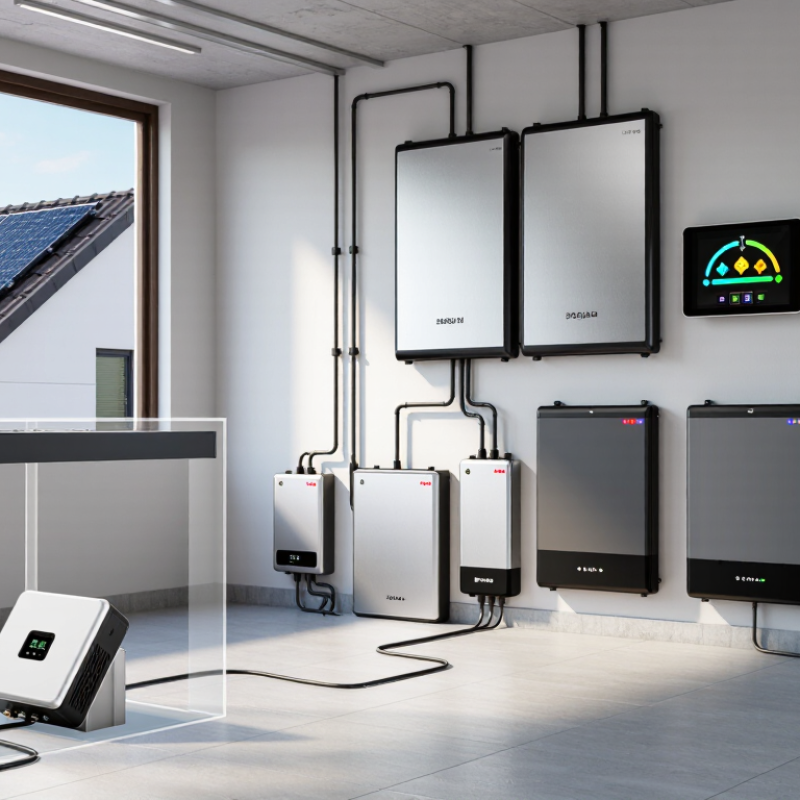
2026 Top Solar Batteries for House Which One Is Best?

2026 Home Battery Basics: 5–30 kWh Capacity and Core Performance Terms

Choosing a home battery in 2026 starts with capacity, not appearance. Most residential systems sit between 5 and 30 kWh. A 5 kWh unit may cover lights, routers, and refrigeration overnight. Larger homes may need 15–30 kWh for longer backup.

Check usable capacity, not only the advertised capacity. Usable capacity reflects the energy available after reserve limits. Depth of discharge shows how much stored energy can be used safely. Round-trip efficiency measures energy lost during charging and discharging. The U.S. National Renewable Energy Laboratory reports that modern battery systems often achieve roughly 85–95% round-trip efficiency, depending on operating conditions. Power rating matters too. A battery with 10 kWh capacity may still struggle with a 5 kW starting load. Capacity is the tank. Power is the pipe.

Tips: Compare usable kWh, continuous kW, surge output, cycle life, warranty terms, and operating temperature. The International Energy Agency’s Electricity 2024 report recorded more than 40 GW of new battery storage additions globally in 2023. That growth improves market experience, but it does not make every system suitable. Match the battery to measured household loads, solar production, and outage length. A load monitor can reveal surprising evening demand. I once underestimated cooking equipment. That mistake changed the sizing calculation. Oversizing also deserves reflection, because unused capacity increases cost without guaranteeing better resilience.

Compare Battery Chemistries: LFP Delivers 3,000–8,000 Cycle Life

For 2026 home energy storage, lithium iron phosphate, or LFP, deserves close attention. Its typical service life ranges from 3,000 to 8,000 cycles. That range is broad. Actual results depend on temperature, charge limits, discharge depth, and cell quality. A battery cycling once daily could operate for roughly eight to twenty-two years on paper. Real households may see less.

Depth of discharge matters. An LFP unit used between 10% and 90% charge usually experiences less stress than one emptied every night. Many systems also reserve capacity for safety. Check usable kilowatt-hours, not only the advertised battery size. A 10 kWh battery may provide 9 kWh for daily loads. Installation records, thermal controls, and warranty conditions deserve equal attention.

Other chemistries still have practical strengths. Nickel-based lithium batteries can offer strong energy density when indoor space is limited. Lead-acid systems may cost less initially, but they often provide fewer cycles and lower usable capacity. LFP generally offers stable thermal behavior and avoids cobalt and nickel in its cathode. It is not magic. Cold weather can reduce charging performance, and poor settings can shorten its life. A shaded, ventilated installation and measured energy monitoring can matter more than impressive laboratory numbers. I would compare five-year operating data before trusting the longest cycle claim.

Match Storage Size: 10–20 kWh Usable Capacity for Typical Homes

2026 Top Solar Batteries for House: Which One Is Best?

For a typical home, the best battery is not the largest one. Start with usable capacity, not the advertised nameplate figure. U.S. Energy Information Administration data show average household electricity use near 900 kWh monthly in 2022. That equals roughly 30 kWh daily, but demand is uneven. Air conditioning and electric heating can consume several kilowatt-hours within hours. A 10–20 kWh usable battery usually supports essential loads, rather than the entire house.

Think in appliances. A refrigerator, lights, internet router, security equipment, and selected outlets may draw 500–1,200 watts. A 10 kWh usable battery could cover those loads for several hours overnight. A 20 kWh unit offers more breathing room during cloudy weather or a short outage. NREL’s Storage Futures Study uses four-hour storage as a common planning benchmark, supporting the value of matching capacity with expected discharge duration. Bigger is not automatically better.

Check reserve settings, inverter losses, and future electricity use. A battery labeled 12 kWh may deliver less during an outage if the system keeps a reserve. The U.S. Department of Energy also stresses evaluating storage with solar production, load patterns, and resilience goals. A 10–20 kWh range is practical, but imperfect. Homes with heat pumps, electric vehicles, or well pumps may need more capacity or careful load management. Measure real evening consumption before buying. Guesswork gets expensive.

Evaluate Efficiency: 85–95% Round-Trip Efficiency and 10–15-Year Warranties

Choosing the best home solar battery in 2026 starts with usable energy, not the biggest advertised capacity. Round-trip efficiency shows how much stored electricity returns to your appliances. An 85% rating may lose 15 kilowatt-hours for every 100 kilowatt-hours charged. At 95%, the same cycle returns about 95 kilowatt-hours. That difference becomes visible during cloudy weeks and high-rate utility periods. Real-world results depend on temperature, inverter settings, standby consumption, and partial cycling. Ask for measured data, not only laboratory claims. Small details matter.

A serious comparison also examines the 10- to 15-year warranty. Read the guaranteed retained capacity, cycle limit, and service response terms. A ten-year promise can be less useful if capacity falls sharply after year seven. Look for clear conditions covering installation, operating temperature, and software support. During a site review, photograph the battery location and record daily load patterns. These notes help match storage size to evening cooking, refrigeration, heating, and backup needs. I would not choose a battery from efficiency alone. Capacity, safety controls, repair access, and installer competence influence ownership. Warranty language is easy to skim and easy to misunderstand. That is where careful questions still pay.

2026 Top Solar Batteries for House: Efficiency and Warranty Benchmarks

Residential solar batteries commonly target 85–95% round-trip efficiency, meaning the percentage of stored electricity that can be recovered after charging and discharging. Typical product warranties range from 10 to 15 years. Higher efficiency can reduce energy losses, while a longer warranty may provide greater long-term coverage.

The chart presents technology-neutral market benchmarks rather than data from any specific company or brand.

Select the Best System: Safety, Inverter Compatibility, and Cost per kWh

Choosing a home solar battery in 2026 requires more than comparing storage size. Safety should lead the decision. Look for documented thermal protection, sturdy enclosures, battery management controls, and clear shutdown procedures. Certified installation matters too. A battery placed beside a hot garage wall may perform differently from one installed in a shaded utility area.

Inverter compatibility is equally important. Check the battery’s voltage range, communication protocol, power rating, and charging limits. Some systems connect through direct current, while others use alternating-current coupling. Your existing inverter may require firmware support or additional control equipment. Ask the installer to test backup switching, not just normal operation. A system that cannot start essential loads during an outage is not a complete solution.

Cost per kWh needs careful calculation. Divide the installed price by usable lifetime energy, rather than advertised capacity. For example, a 12 kWh battery delivering 6,000 cycles at 90% usable capacity provides about 64,800 kWh. At an installed cost of $12,000, that equals roughly $0.19 per kWh, before financing, maintenance, or replacement costs. The estimate is imperfect. Real weather, partial cycling, and aging will change it. Review warranty limits, expected degradation, and service access before accepting a low headline price. A smaller battery may cost more per kWh, yet suit a modest home better.

2026 Top Solar Batteries for House: Which One Is Best? — Select the Best System for Safety, Inverter Compatibility, and Cost per kWh
System Type Best Use Case Typical Usable Capacity Round-Trip Efficiency Expected Service Life Safety Profile Inverter Compatibility Typical Installed Cost per Usable kWh* Overall Assessment
Modular LFP Battery with Hybrid Inverter
Best overall choice
New solar installations and homes seeking a balanced combination of safety, efficiency, and expandability. 10–30 kWh per system; commonly expandable in 5–10 kWh modules 90%–95% Approximately 10–15 years or 6,000–10,000 equivalent full cycles, depending on operating conditions and warranty terms. ★★★★★
Lithium iron phosphate chemistry has strong thermal stability and a lower risk of thermal runaway than nickel-rich lithium chemistries.
Requires a compatible low-voltage or high-voltage hybrid inverter, approved battery-management communication, and certified protection devices. $700–$1,200 The strongest general-purpose option for most houses. Good safety, long cycle life, high efficiency, and practical expansion.
AC-Coupled LFP Battery System
Best for retrofits
Existing solar systems where replacing the current solar inverter is undesirable or impractical. 5–20 kWh per system; expandable on selected platforms 85%–92% Approximately 10–15 years or 6,000–10,000 equivalent full cycles. ★★★★★
LFP chemistry offers strong thermal stability when installed with certified enclosure, ventilation, and protection equipment.
Usually compatible with existing PV inverters because the battery has its own bidirectional inverter. Confirm backup-load, grid-forming, and communication requirements. $900–$1,400 Convenient for solar retrofits, but the extra AC-to-DC and DC-to-AC conversions can reduce efficiency and increase cost.
High-Voltage LFP Whole-Home System
Best for high power demand
Larger homes requiring higher continuous output for heat pumps, well pumps, air-conditioning, or selected whole-home backup loads. 10–40 kWh per system; often installed in multiple modules 90%–95% Approximately 10–15 years or 6,000–10,000 equivalent full cycles. ★★★★★
LFP chemistry combined with a high-voltage battery-management system can provide a robust safety profile when professionally installed.
Must be matched to a compatible high-voltage inverter. Battery voltage range, maximum current, communications protocol, backup transfer equipment, and grid certification must all match. $750–$1,200 Excellent performance for demanding loads, but installation is more technically complex and normally requires professional commissioning.
NMC Lithium-Ion Battery System
Space-constrained option
Homes where compact size and high energy density are more important than maximum cycle life and thermal margin. 5–15 kWh per system 85%–92% Approximately 8–12 years or 3,000–6,000 equivalent full cycles, depending on depth of discharge and temperature. ★★★☆☆
Requires carefully designed thermal management, clearances, monitoring, and certified installation because nickel-rich chemistries are generally less thermally stable than LFP.
Compatible only with approved inverter and battery-management combinations. Do not mix batteries, inverters, or control systems without explicit certification. $800–$1,300 Can offer good power and energy density, but LFP is generally preferred for new residential installations where space is available.
Sodium-Ion Residential Battery
Emerging alternative
Early adopters prioritizing reduced dependence on lithium materials and acceptable performance in colder conditions. 5–20 kWh, depending on the available modular product 85%–92% Approximately 8–15 years or 3,000–6,000 equivalent full cycles; product-specific data varies considerably. ★★★★☆
Non-flammable electrolyte designs and lower dependence on nickel and cobalt can be advantages, but residential field experience is still more limited.
Compatibility is currently more limited than for LFP. Use only a complete, certified battery-and-inverter package with documented grid and backup approvals. $800–$1,400 Promising but not yet the default choice for most households because product availability, installer familiarity, and long-term service networks vary.
How to read the table
  • Cost per usable kWh: Approximate 2026 U.S. residential installed cost, including battery equipment, inverter-related equipment, standard installation, permitting, and commissioning. Incentives, difficult electrical work, main-panel upgrades, and long-distance wiring are excluded.
  • Usable capacity: The energy normally available to the household after the battery-management system applies its operating reserve; it is not the same as nameplate capacity.
  • Efficiency: Round-trip efficiency is the approximate energy recovered after charging and discharging. Actual results vary with temperature, power level, standby consumption, and inverter configuration.
  • Safety: Battery chemistry alone does not determine installation safety. Certified equipment, correct clearances, over-current protection, temperature monitoring, approved enclosure, and compliance with applicable electrical and fire codes are essential.
  • Compatibility check: Before purchase, verify continuous and surge power, battery voltage range, inverter certification, communication protocol, backup-panel design, maximum battery count, and local utility interconnection requirements.
Reference framework: residential energy-storage performance terminology and safety practices are consistent with guidance commonly used by the U.S. Department of Energy, the National Renewable Energy Laboratory, UL 9540/UL 9540A, and NFPA 855. Product specifications and installed prices vary by location and system design.

FAQS

What home battery capacity is common in 2026?

Most residential systems range from 5 to 30 kWh. A 5 kWh battery may support lights, refrigeration, and a router overnight. Larger homes may need 15–30 kWh for longer outages. Bigger is not always better.

Why does usable capacity matter more than advertised capacity?

Usable capacity shows how much energy appliances can actually receive. Reserve limits reduce the available amount. A battery advertised at 10 kWh may deliver less during normal operation. Check usable kWh before comparing prices.

How do capacity and power differ?

Capacity measures stored energy. Power measures how quickly the battery can deliver energy. A 10 kWh battery may struggle with a 5 kW starting load. Capacity is the tank. Power is the pipe.

What does round-trip efficiency mean?

Round-trip efficiency measures energy returned after charging and discharging. An 85% system loses about 15 kWh after charging 100 kWh. A 95% system returns about 95 kWh under similar conditions. Temperature, standby use, and inverter settings affect real results.

What warranty details deserve careful attention?

Review the warranty length, retained capacity, cycle limit, and service response. Many warranties last 10–15 years. A long warranty may provide limited value after heavy capacity loss. Read the conditions carefully. The wording can mislead.

How should a battery be matched to household demand?

Measure evening loads before choosing a system. Record cooking equipment, heating, refrigeration, lighting, and networking devices. A load monitor may reveal surprising demand after sunset. I once underestimated cooking equipment. That changed my sizing calculation.

What safety and installation features should buyers check?

Look for thermal protection, sturdy enclosures, battery controls, and clear shutdown procedures. Certified installation helps reduce avoidable risks. A shaded utility area may perform better than a hot garage wall. Ask for documented operating temperature limits.

How can buyers check inverter compatibility?

Compare voltage range, communication protocol, charging limits, and power rating. Check whether the system uses direct-current or alternating-current coupling. Existing equipment may need software support or additional controls. Test backup switching, not only normal operation.

How should the cost per kWh be calculated?

Divide the installed price by usable lifetime energy. A 12 kWh battery with 6,000 cycles and 90% usable capacity provides about 64,800 kWh. At $12,000 installed, the estimated cost is about $0.19 per kWh. Weather, aging, and partial cycling change the result. The estimate is imperfect.

Conclusion

Choosing the right Solar Batteries For House requires more than comparing prices. Modern home batteries commonly range from 5 to 30 kWh, while key performance factors include usable capacity, cycle life, charging speed, efficiency, and warranty coverage. For many typical households, a system offering 10–20 kWh of usable storage can provide a practical balance between daily energy needs and backup power. Lithium iron phosphate (LFP) chemistry is especially attractive because it can deliver approximately 3,000–8,000 cycles while offering strong thermal stability and dependable long-term performance.

Homeowners should also evaluate round-trip efficiency, with efficient systems typically achieving about 85–95% of the energy stored and recovered. A warranty lasting 10–15 years can provide greater confidence in long-term value. The best system should include strong safety protections, match the home’s inverter and solar configuration, and offer a reasonable cost per usable kilowatt-hour. By comparing these factors together, buyers can select storage that supports reliability, energy independence, and future household needs.


Isabella

Isabella

Isabella is a dedicated marketing professional with a sharp focus on driving brand growth and engagement through strategic content creation. With an extensive background in digital marketing, she combines her passion for storytelling with her keen understanding of industry trends to deliver......